COPY OF CAMP.DOCX · ANNOTATED 9 SEPTEMBER 2026 · NOW BUILT
The category card review
Two screenshots of the Manage Inventory category grid with two annotations between them, and two replies in the margin. A design review of one card — and, since 15 September, a card that exists.
- Asked for
- 2ordering, and the card
- Fields on the card now
- 2610 old, 11 new, 5 derived
- Left unbuilt
- 3no data behind them
- Migrations
- 0additive only
“How are these ordered?” — the sort was already right, count DESC on the server; it just never said so. A caption fixed it, with no query change.
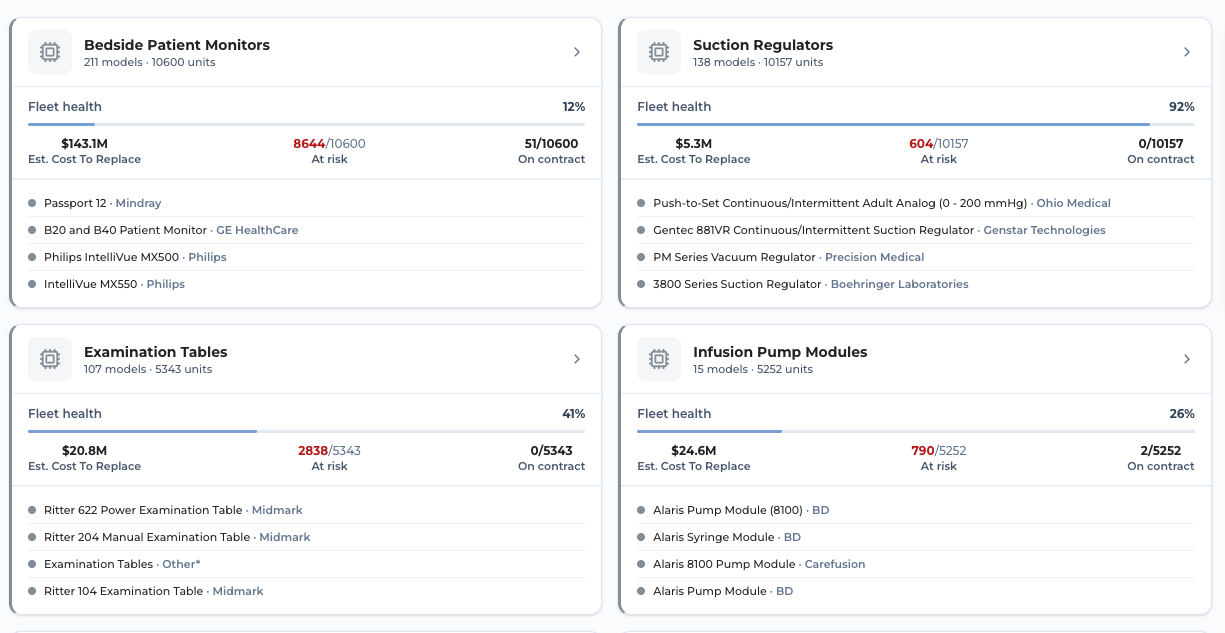
“Current cards don’t tell us much” — 26 fields now, against the 9 the old card carried.
What the cards showedbefore
The two annotationsand their replies
“How are these ordered?”shipped as a caption
Answered in the margin at the time, but the question was asked because the grid never said so on screen.
Inside each band, the cards are sorted by how many units you own of that category.
Jaya Widhrani · 9 Sep 2026
“Current cards don’t tell us much”shipped
Written directly above the design below, so it read as: make the card more like this.
I think we’re showing almost the same information in the card below, but maybe the numbers stand out more there than the text.
Jaya Widhrani · 9 Sep 2026
Half right, as it turned out. Ten of the card’s fields were indeed the same information re-presented — but eleven were new on the API and five more are computed in the browser. The emphasis mattered; so did the extra query.
What was proposedand largely built
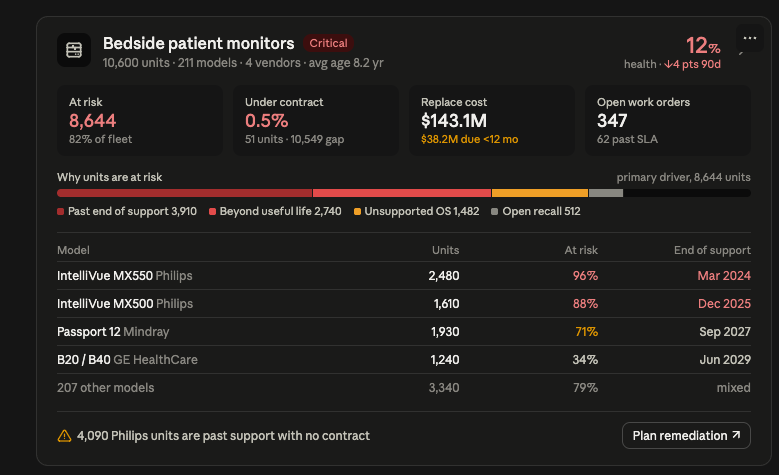
The ↓4 pts 90d trend, the Unsupported OS risk driver and the per-model end-of-support dates were all dropped — not for effort, but because no column holds them. Why, and what shipped instead.