COPY OF CAMP.DOCX · ANNOTATED 9 SEPTEMBER 2026
The category card review
The document is not a spec. It is two screenshots of the Manage Inventory category grid with two annotations between them, and two replies in the margin — a design review of one card, caught mid-conversation.
- What is in the file
- 2images, 2 annotations, 2 comments
- Tasks
- 2ordering, and the card itself
- Fields already served
- 7presentation only
- Fields that are new
- 8one needs a schema change
What the cards show todayimage 2
The grid as it ships: title, model and unit counts, fleet health, three figures, four model names.
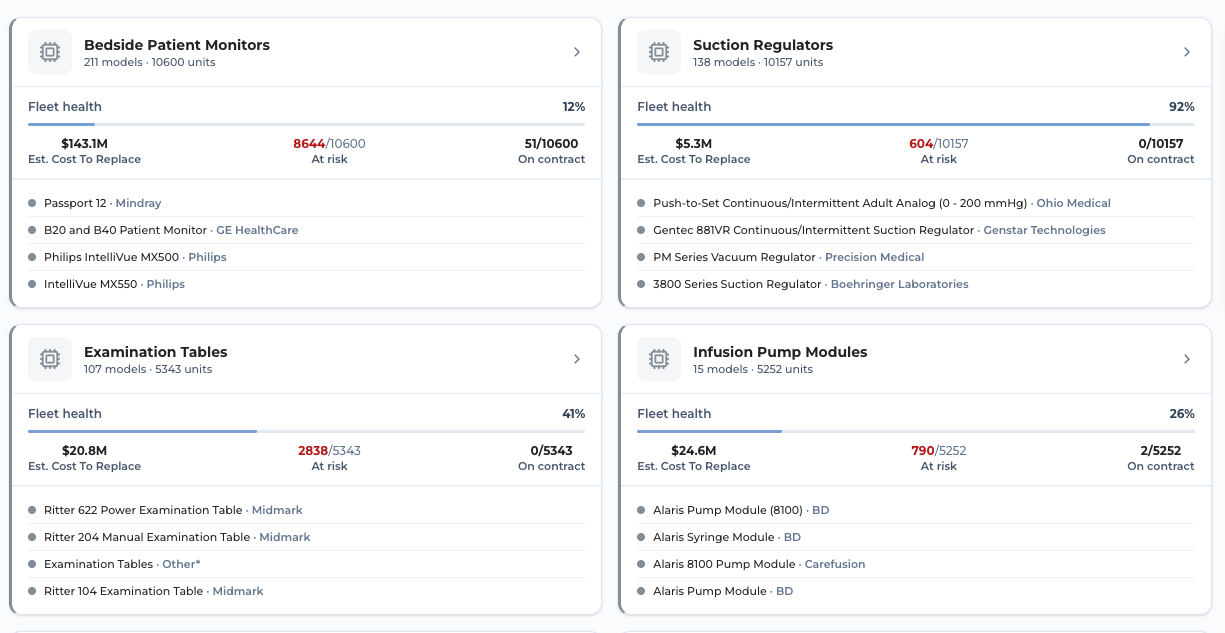
manage-inventory.component.html, bound to the AssetGroup DTOThe two things askedannotations
1. “How are these ordered?”answered
Answered in the margin, but the question was only asked because the grid never says so. The behaviour is right; it is invisible.
Inside each band, the cards are sorted by how many units you own of that category.
Jaya Widhrani · 9 Sep 2026
2. “Current cards don’t tell us much”the real task
Written directly above the design below, so it reads as: make the card more like this.
I think we’re showing almost the same information in the card below, but maybe the numbers stand out more there than the text.
Jaya Widhrani · 9 Sep 2026
What is proposedimage 1
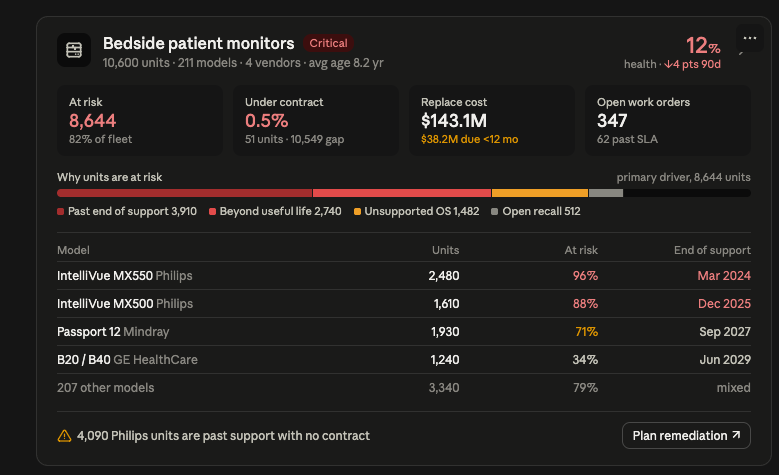
Jaya reads the new card as the same information with stronger numbers. That is true of seven of its fields and not true of eight — and the gap between those two readings is the entire cost of the task. A restyle is a front-end afternoon; the eight include a work-order source, an at-risk decomposition and a 90-day trend that cannot exist until something starts recording history.
Settling that in one conversation is what stops a “restyle the card” ticket quietly becoming an integration. The field-by-field split is the input to it.